
Borrowing from Tomorrow
Four Design Bridges to Sustainable Transformation
Companies are redesigning work at extraordinary speed. Borrowing from Tomorrow asks whether today's choices are building the talent, judgment, trust, and capabilities organizations will need next, or quietly drawing them down.
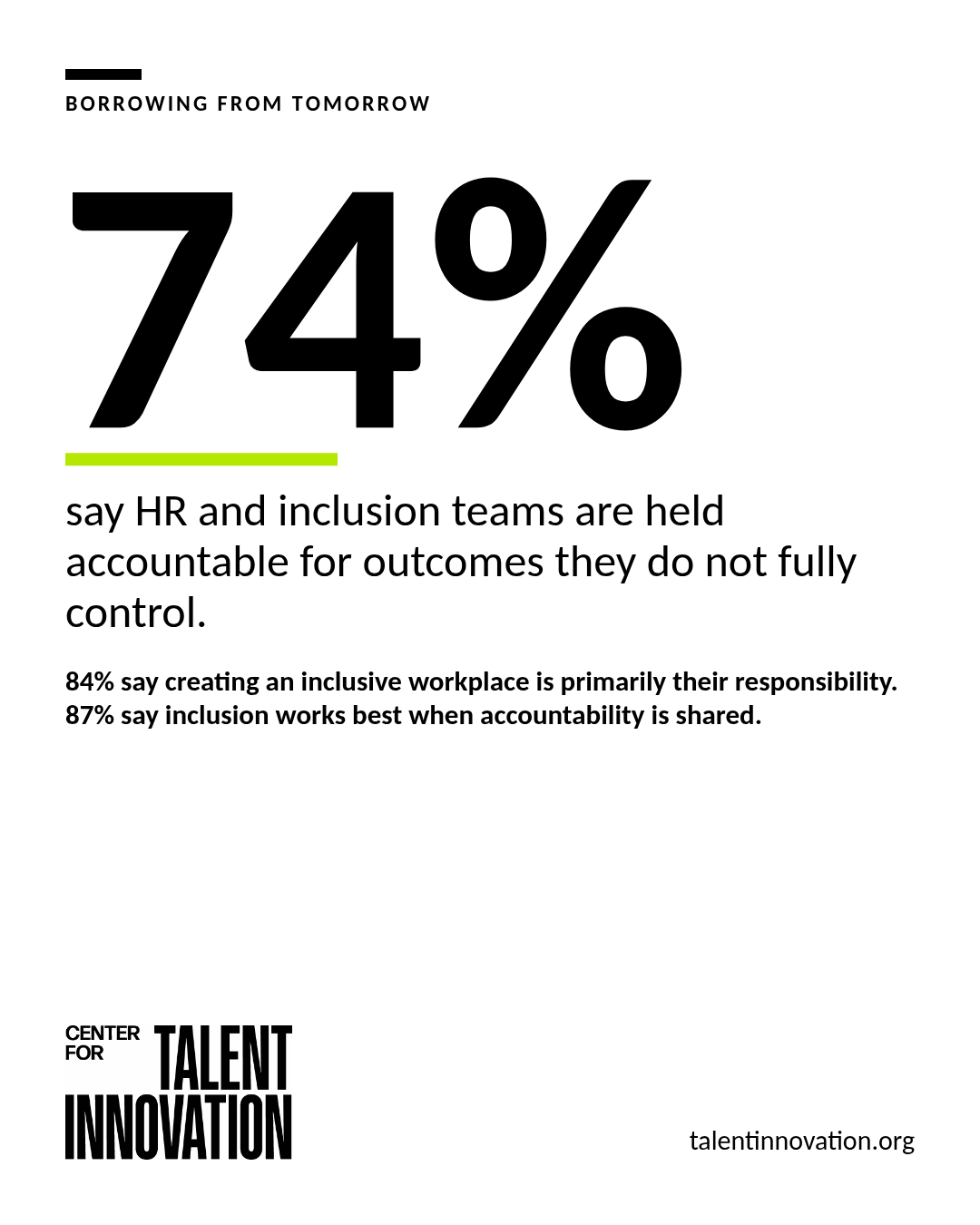
74%
say HR and inclusion teams are often held accountable for outcomes they do not fully control
49%
say broad human perspectives are considered only sometimes, rarely, or never in AI governance
12%
of CEOs and executives regularly review employee listening data beyond engagement surveys
RESEARCH REPORT
2026
WHAT WE FOUND
01
Transformation can create value today while weakening value tomorrow
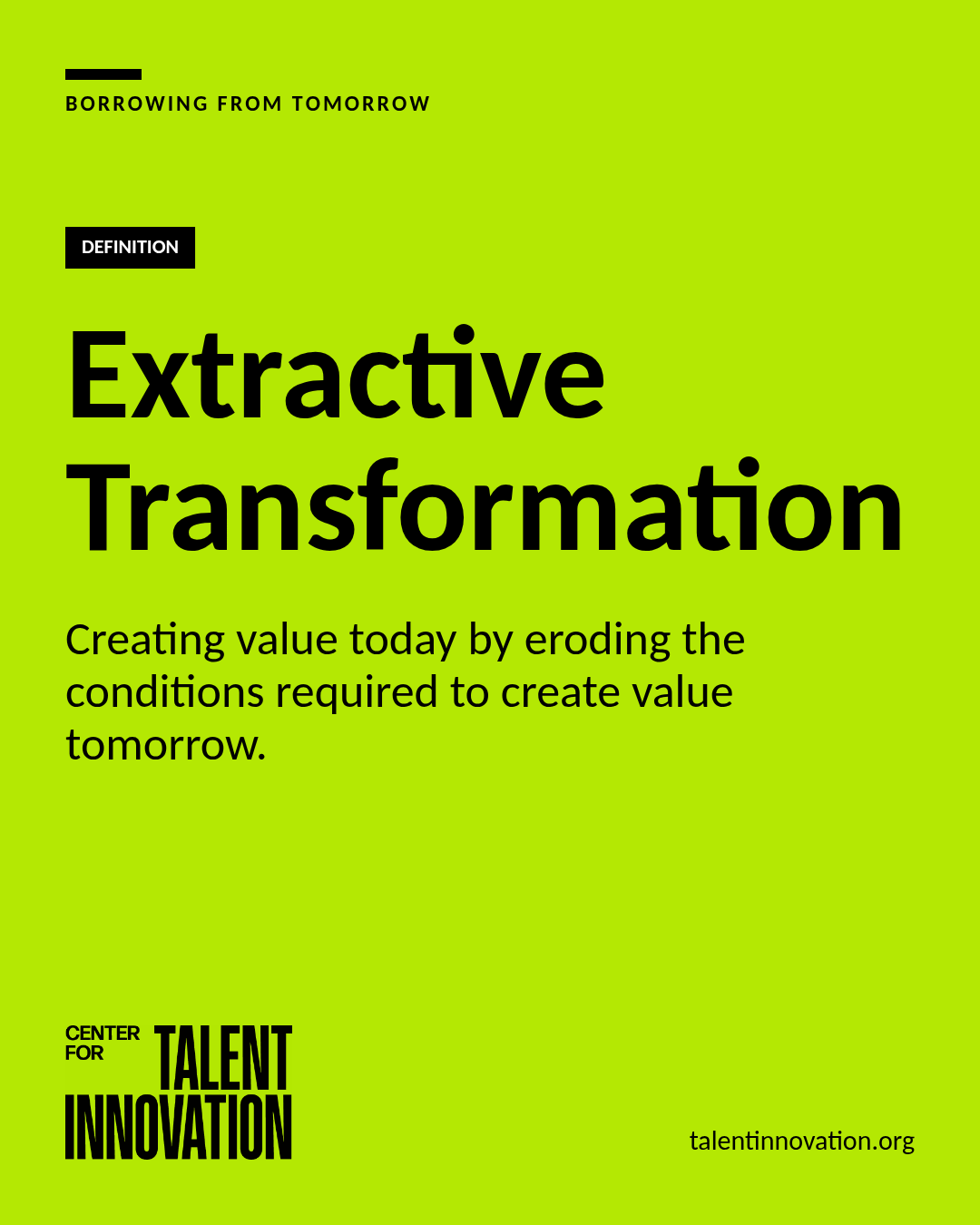
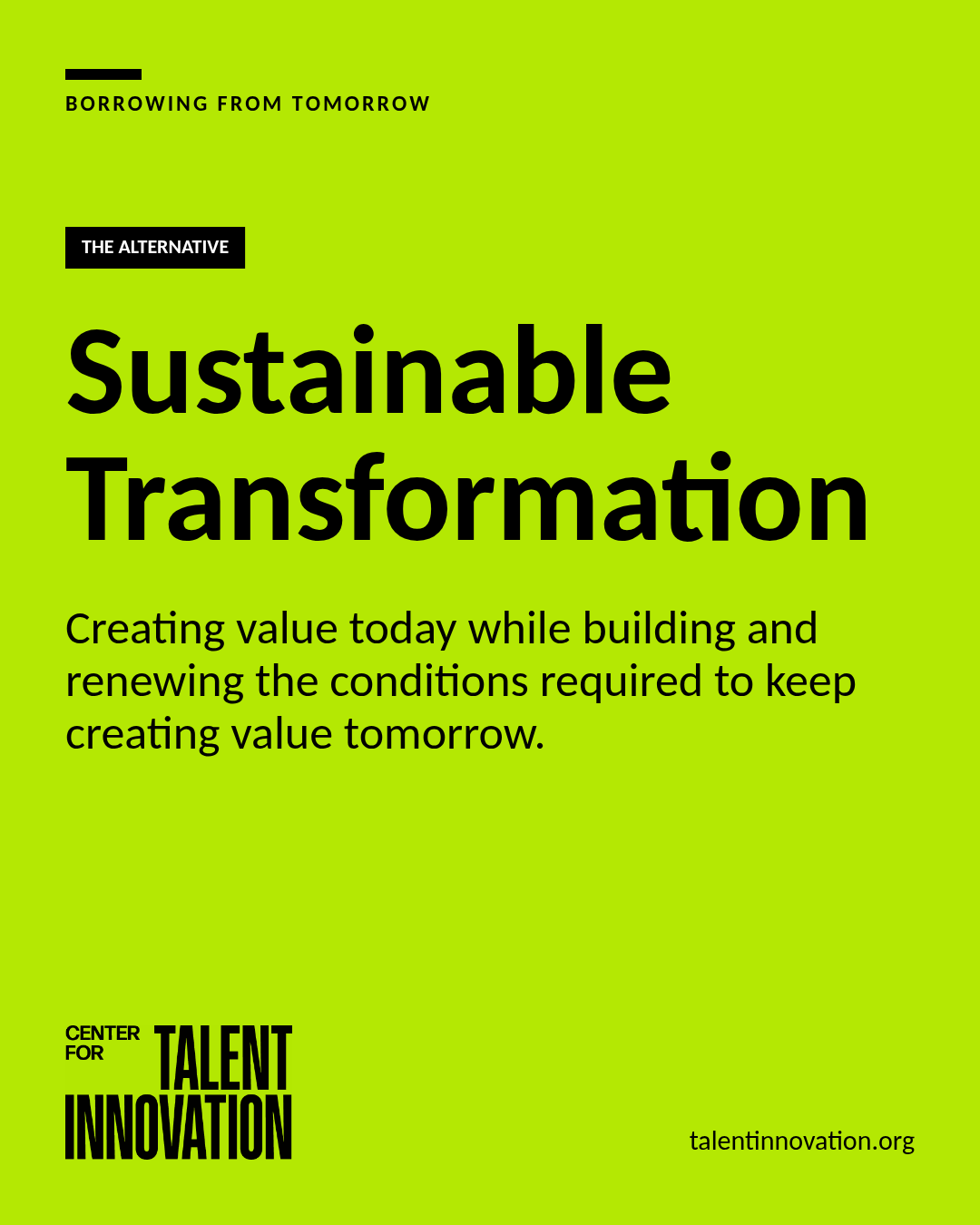
CTI calls this Extractive Transformation: creating value today by consuming the conditions required to create value tomorrow.
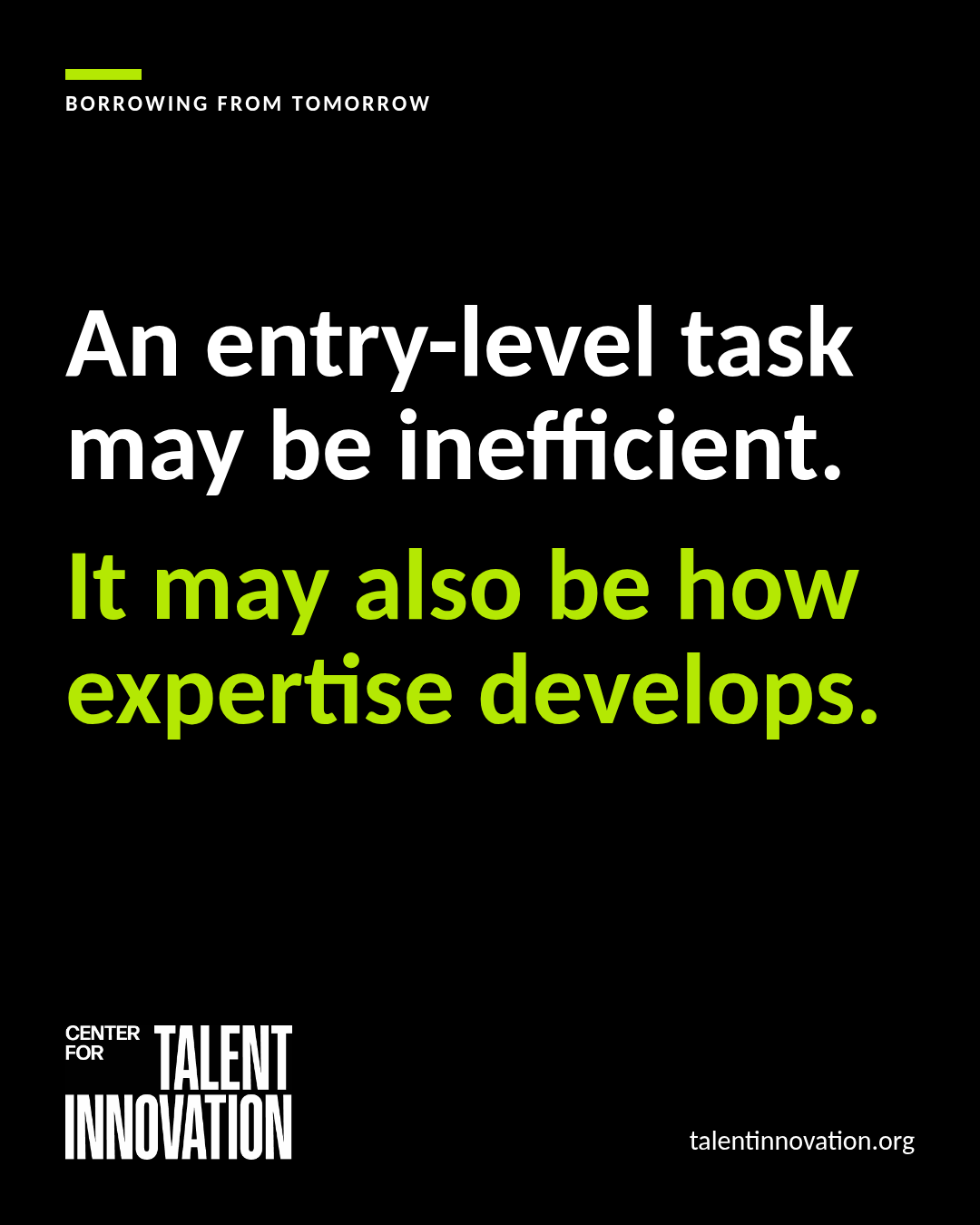
A task automated for efficiency may also have been where someone learned judgment. A management layer removed for speed may have carried relationships or institutional knowledge. A decision automated for consistency may also have been where people learned to recognize exceptions.
02
A Human Talent Deficit can build before leaders see it
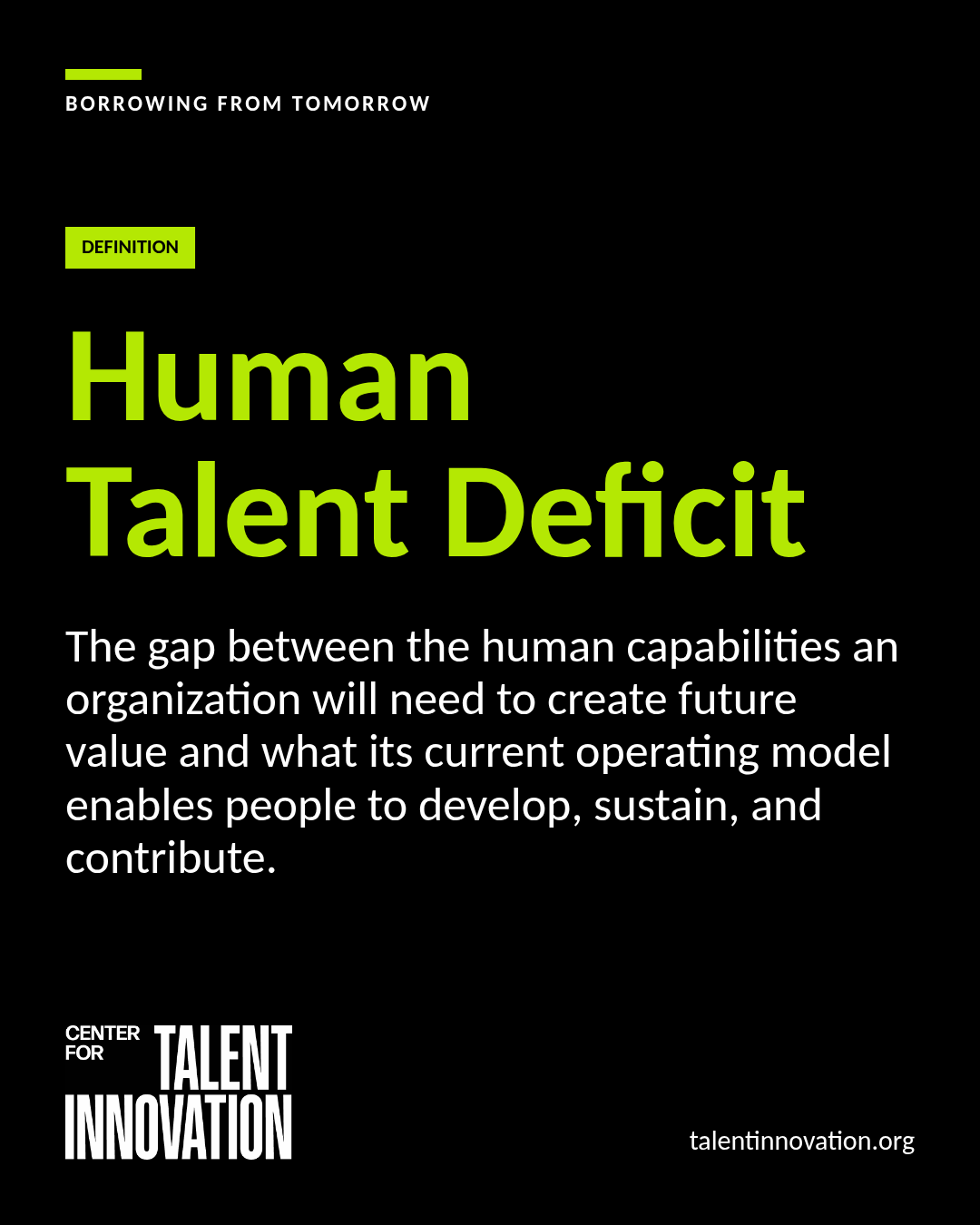
CTI defines a Human Talent Deficit as the gap between the human capabilities and contributions an organization will need to create future value and what its current operating model enables people to develop, sustain, and contribute.
That deficit can show up in weaker judgment, thinner talent pipelines, lost institutional knowledge, fewer developmental experiences, diminished discretionary effort, and less capacity to innovate.
03
Organizations are often redesigning work with too narrow a field of view
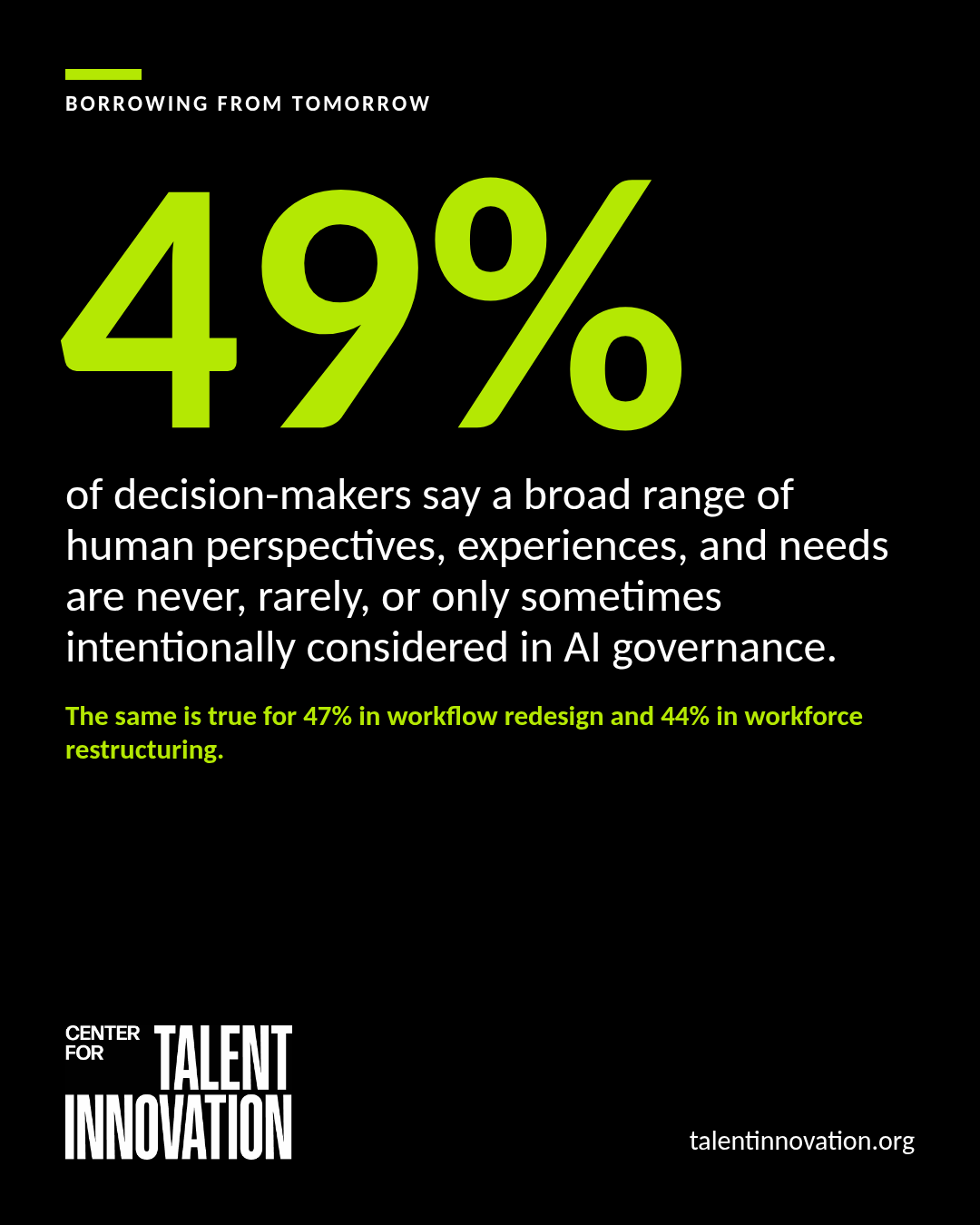
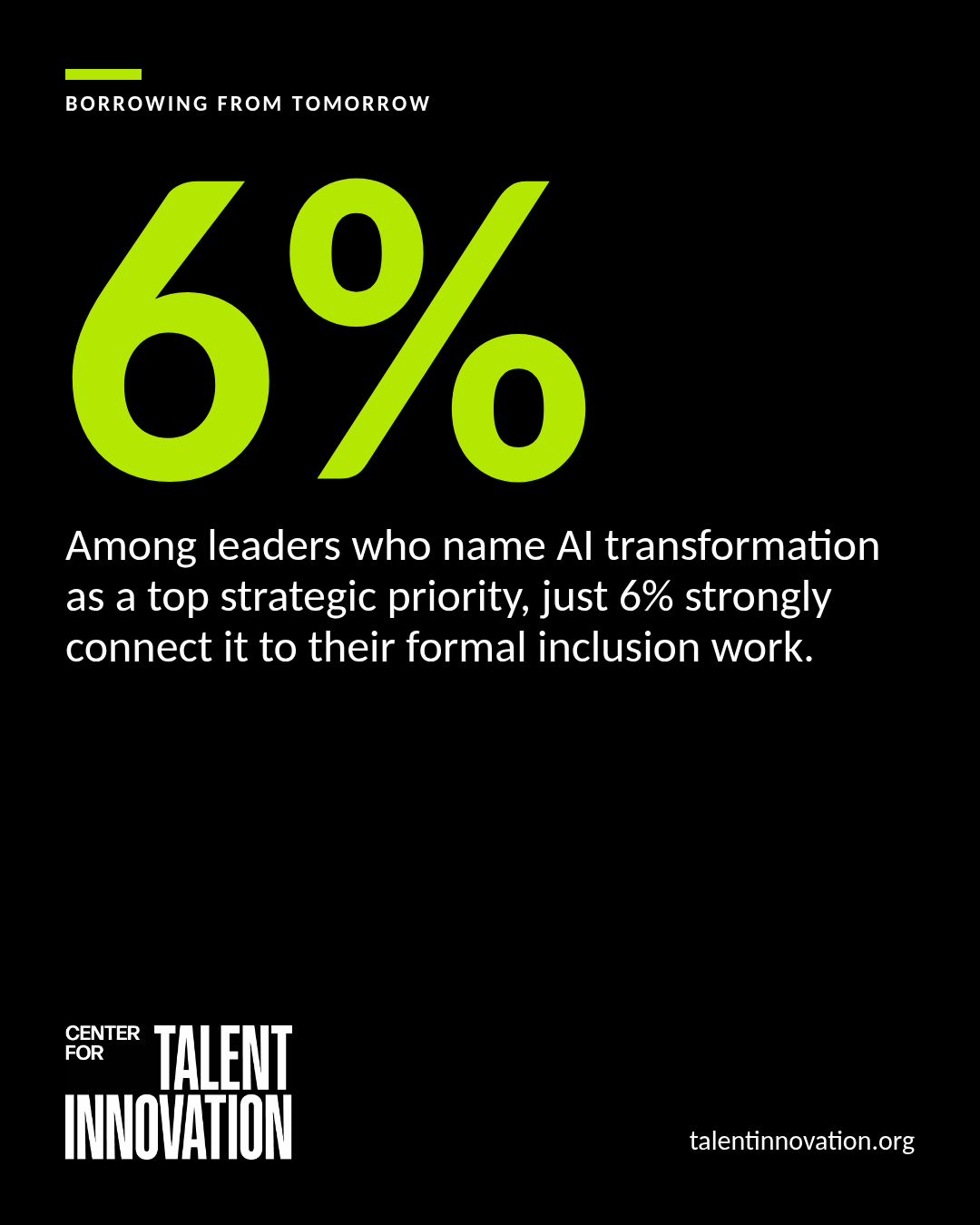
Nearly half of decision-makers say a broad range of human perspectives, experiences, and needs are considered only sometimes, rarely, or never in AI governance.
Similar gaps appear in workflow redesign, AI tool development, workforce restructuring, organizational change, and risk management.
04
Leaders are surrounded by data and still miss important signals
Executives regularly review performance and productivity data. Far fewer review evidence that can help explain why outcomes are changing — only 12% regularly review employee listening data beyond engagement surveys.
The risk is an organization that is data rich and insight poor.
FROM THE INTERVIEWS
“I think we all have to be ‘change the bank.’ But we don't have the structures in place to actually allow us to do what needs to be done.”
CTI TASKFORCE MEMBER
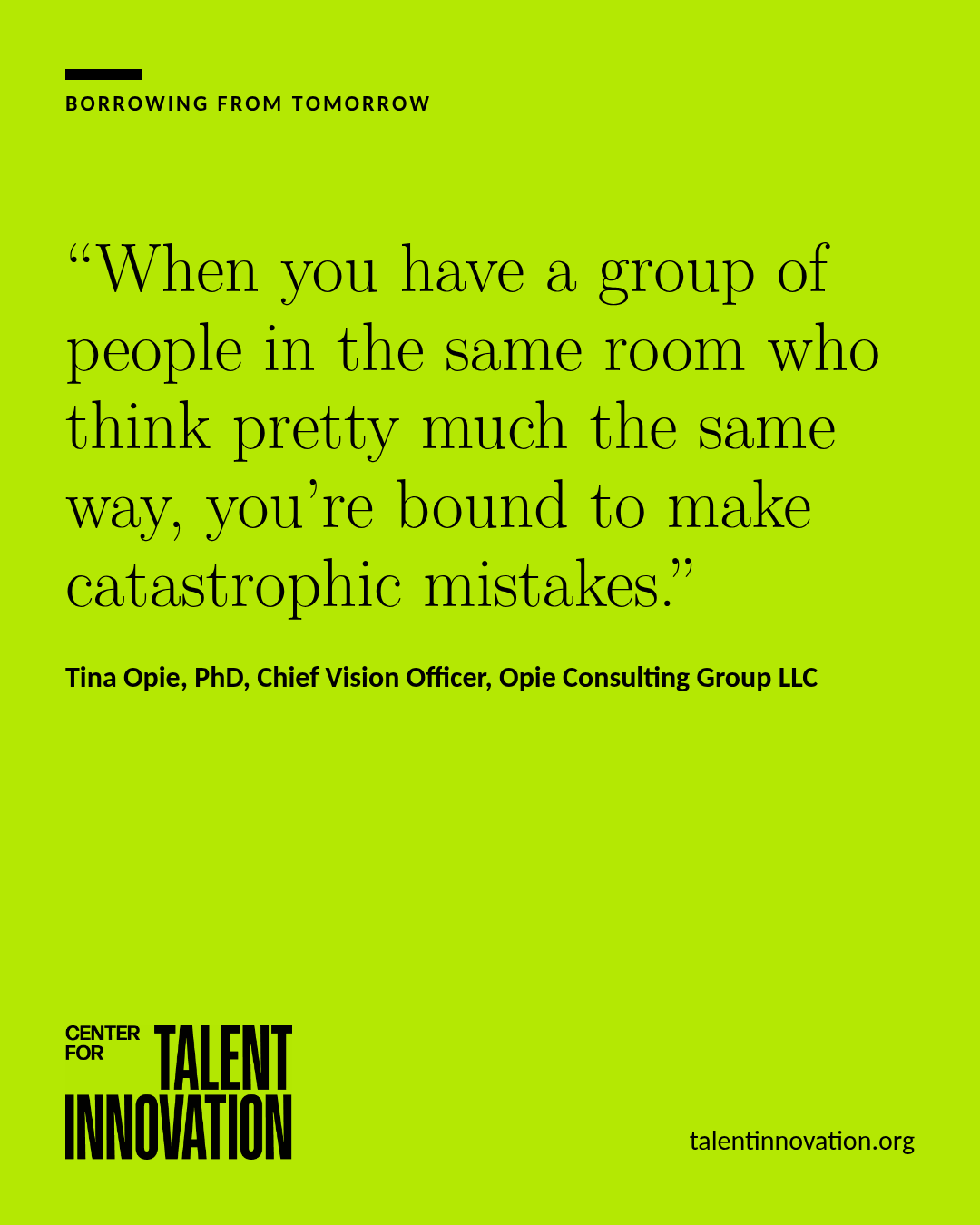
“Right now it is the same three people with the same three backgrounds in the room controlling the technology and transformation conversation.”
INCLUSION EXECUTIVE
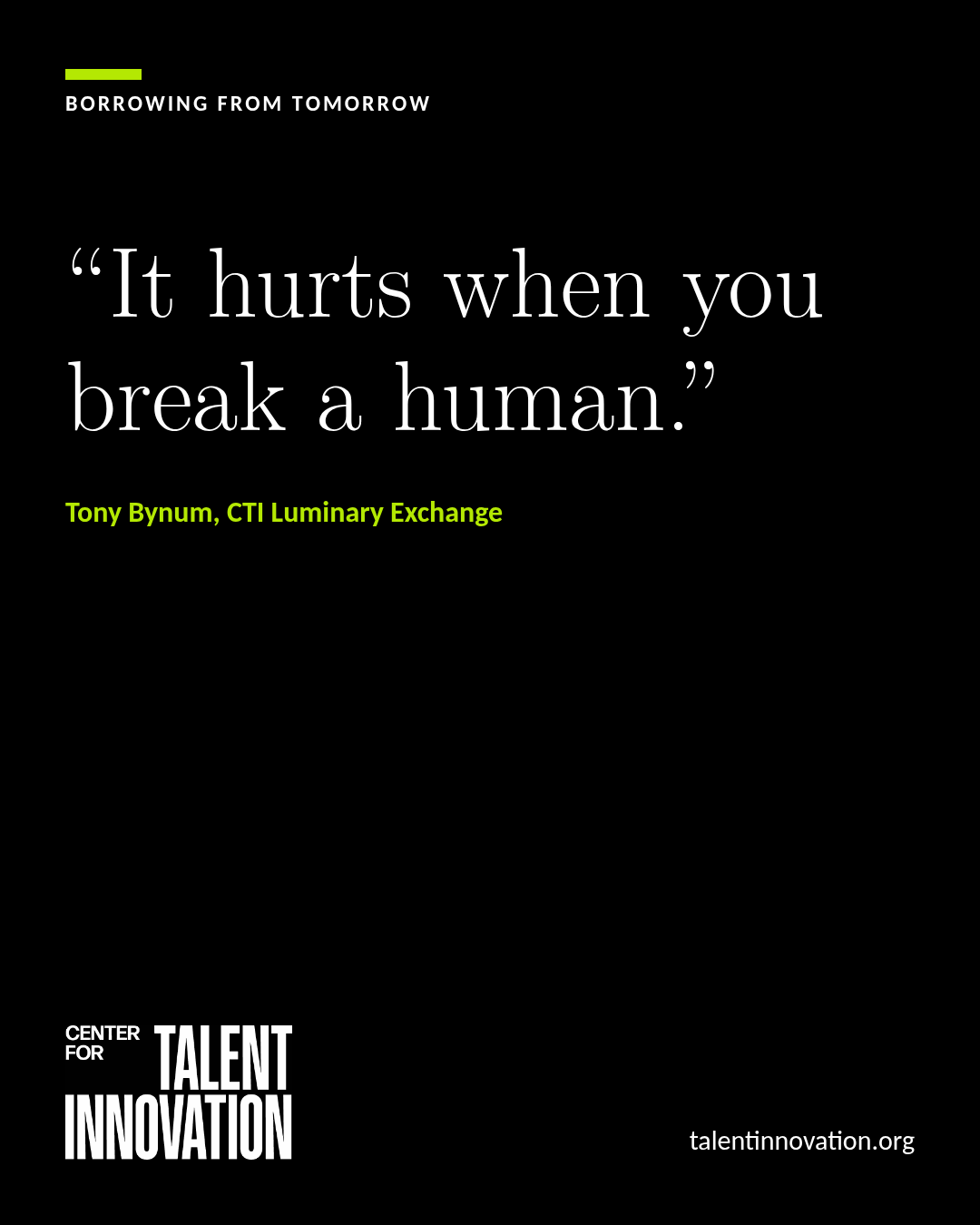
“It hurts when you break a human.”
01
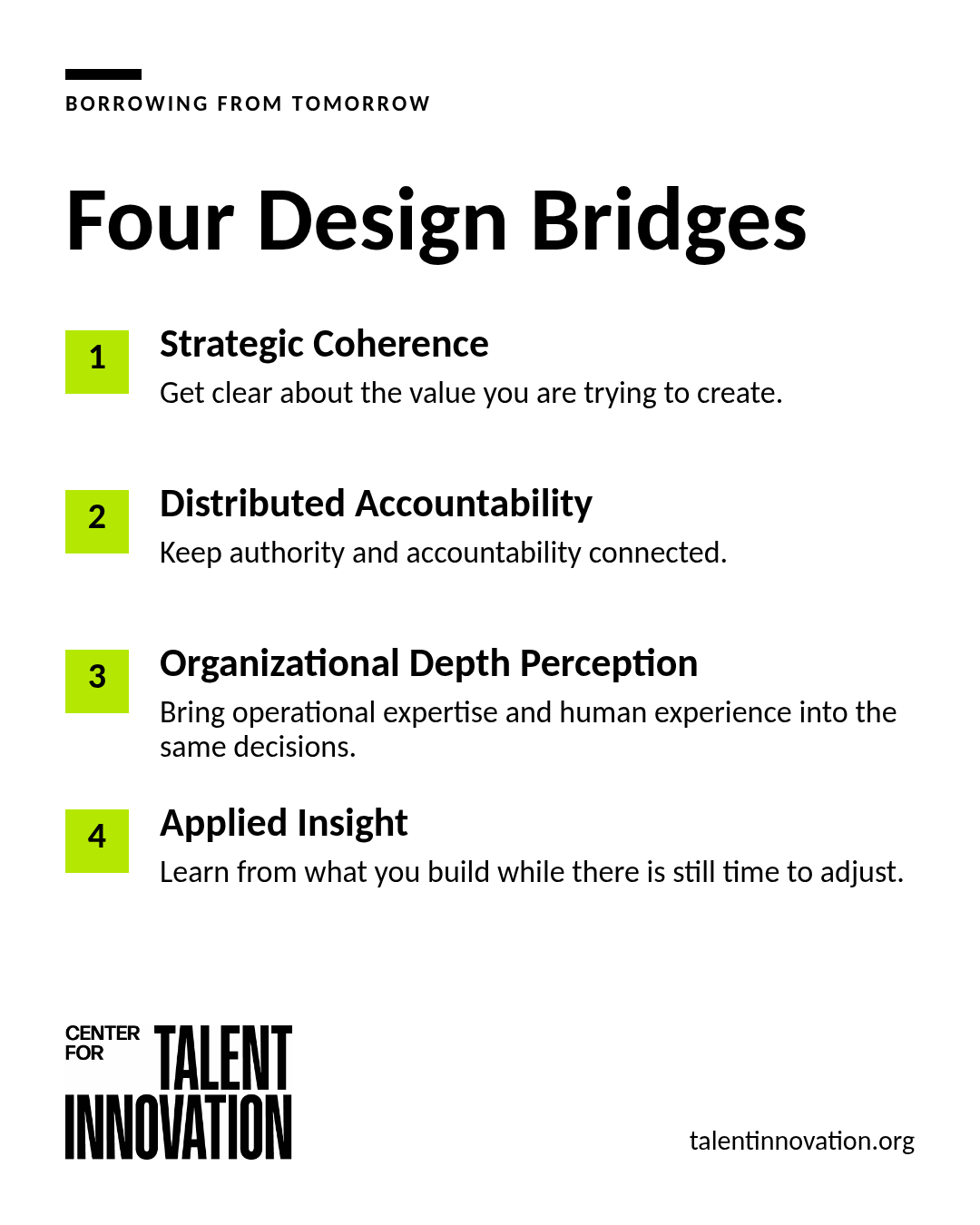
Strategic Coherence
What value is our organization trying to create, and do our decisions consistently reinforce it?
Leaders need a shared understanding of how, for whom, and over what time horizon the organization creates value so that thousands of distributed decisions add up to strategy rather than drift.
02
Distributed Accountability
As the power to shape outcomes becomes more distributed, how will we keep authority, responsibility, and accountability connected?
The people held accountable for an outcome need enough authority to shape it.
03
Organizational Depth Perception
How will we see our organization well enough to redesign wisely?
Leaders need both an operational lens and a human lens. Together, they reveal consequences, dependencies, and opportunities that no single vantage point can see alone.
04
Applied Insight
What are our choices producing, and what will we do with what we learn?
Organizations need the capacity to recognize meaningful signals, understand what they reveal, and change course before small problems become systemic ones.
THE FRAMEWORK
The Four Design Bridges
WHAT ORGANIZATIONS CAN DO NOW
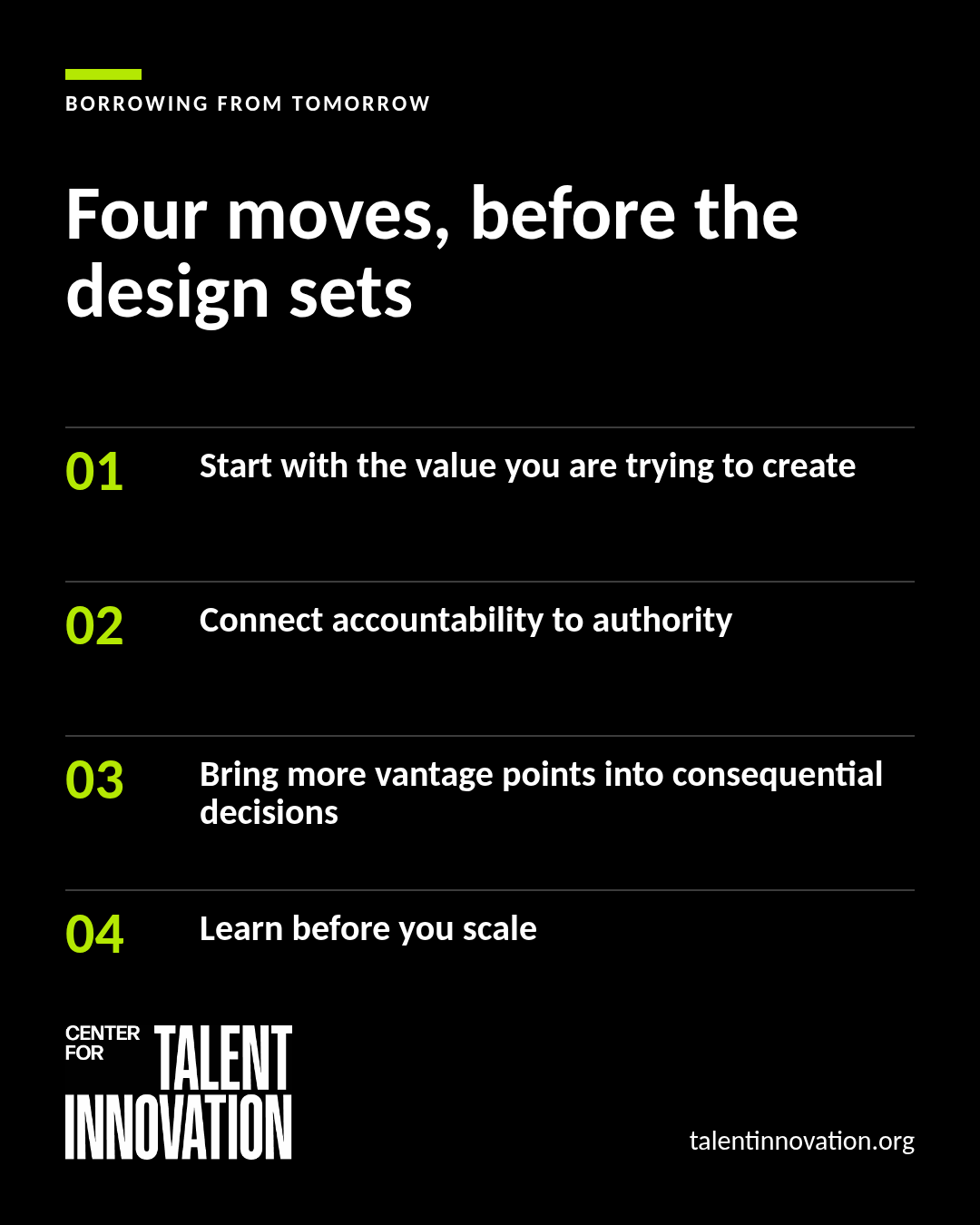
Four moves, before the design sets
The full report carries the Four Design Bridges in depth, the research behind them, and practical questions leaders can use as they redesign work.
-
Before asking what can be automated, eliminated, or accelerated, ask what value the organization is trying to create, for whom, and over what time horizon.
-
Map the processes, policies, technologies, incentives, and decisions shaping an important outcome. Make sure the people held accountable have enough authority to influence them.
-
Pair operational expertise with people who understand how the work is experienced in practice. Bring those perspectives in while the design is still changeable.
-
Treat redesigned workflows, AI tools, roles, and structures as experiments. Make assumptions explicit, watch for early signals, and adjust as evidence emerges.
Your organization is already building its future. Can you see clearly enough to build it on purpose?
METHOD
Mixed-methods research combining a survey of 173 organizational decision-makers, interviews with 44 organizational leaders, inclusion practitioners, consultants, and subject-matter experts, insights from executive convenings and a design thinking lab, and scholarship across organizational behavior, leadership, systems thinking, psychology, sociology, economics, management, and design.
The study also revisits more than two decades of CTI and Coqual research into workplace culture, relationships, leadership, and organizational systems.
HOW TO CITE
Center for Talent Innovation. Borrowing from Tomorrow: Four Design Bridges to Sustainable Transformation. Coqual Global Lab, 2026.
PRESS & MEDIA
For journalists, editors and event producers
Borrowing from Tomorrow examines how organizations can create value today without weakening the talent, judgment, trust, and capabilities they will need tomorrow.
Download the Card
Source: CTI, Borrowing from Tomorrow, 2026
Download the Card
Source: CTI, Borrowing from Tomorrow, 2026
Download the Card
Source: CTI, Borrowing from Tomorrow, 2026
Share the Findings
Download the Card
Source: CTI, Borrowing from Tomorrow, 2026
Download the Card
Source: CTI, Borrowing from Tomorrow, 2026
Download the Card
Source: CTI, Borrowing from Tomorrow, 2026
Download the Card
Source: CTI, Borrowing from Tomorrow, 2026
Download the Card
Source: CTI, Borrowing from Tomorrow, 2026
Download the Card
Source: CTI, Borrowing from Tomorrow, 2026
Download the Card
Source: CTI, Borrowing from Tomorrow, 2026
Download the Card
Source: CTI, Borrowing from Tomorrow, 2026
Download the Card
Source: CTI, Borrowing from Tomorrow, 2026